The clean energy talent shift is no longer niche. It's large, technical, and already reshaping where strong engineers and product people can build. In 2025, the U.S. recorded $378 billion in energy-transition investment and 54 GW of new utility-scale generation and storage capacity, which tells you something important as a job seeker. This isn't just an industry of hardware assets. It's an industry of forecasting systems, interconnection software, distributed controls, optimization models, marketplaces, customer platforms, and grid data pipelines.
That's why tech people keep moving in. The best clean energy companies need backend engineers who can model messy utility data, product managers who understand financing friction, and data teams who can turn operations noise into dispatch decisions. If you're evaluating where to aim, don't just ask whether a company is “green.” Ask whether its business model creates durable technical problems worth solving, and whether hiring teams can explain those problems clearly.
If you're also thinking about the operating side, this primer on scaling a renewable energy business gives useful context for how these companies grow.
Below are seven companies worth understanding, with the hiring signals and role patterns that matter most if you want to break in.

First Solar is a good filter for one question every tech candidate should ask early. Do you want software work that sits close to physical production, or do you want classic web product cycles?
At First Solar, the answer is physical production. The company sells utility-scale solar modules, so strong candidates usually map their experience to factory systems, yield analytics, quality workflows, supply chain visibility, equipment data, and the internal software that keeps production predictable. That changes how you should read the role list and how you should pitch yourself.
For engineers coming from SaaS, the adjustment is real. The work is often tied to throughput, defect reduction, diagnostics, field performance, and commercial reliability. Teams care less about polished growth loops and more about whether software improves uptime, catches failures earlier, or gives operators better decisions.
When I assess a company like First Solar, I look for hiring across manufacturing systems, data, and enterprise software in the same window. That usually signals that leadership sees software as a core part of the business.
A few hiring signals are especially useful:
That last point matters more than candidates expect.
If an interviewer cannot explain where software changes plant performance or product quality, treat that as a warning sign. In some manufacturers, the tech team still gets treated as support instead of a driver of growth.
If you want to compare First Solar with smaller teams where software may own a larger slice of the product, browse clean energy and climate companies hiring on Underdog.io. That is often the fastest way to spot startups and growth-stage companies pulling in backend, data, platform, and product talent.
The trade-off is straightforward. First Solar makes sense for engineers and product people who want hard industrial systems, cross-functional work with operations, and problems tied to real assets. It makes less sense for candidates who want consumer-facing product ownership or very fast UI iteration.
NextEra Energy Resources sits in a part of the market that rewards scale, contracting sophistication, and execution discipline. That matters for candidates because the best roles here often blend product thinking with infrastructure thinking. You're not just building software. You're supporting development workflows, offtake structures, storage integration, and the systems that move projects from early pipeline to operating assets.
A lot of candidates underestimate how technical utility-scale development has become from a software perspective. Interconnection queues, land data, forecasting, transmission constraints, counterparty workflows, and commercial modeling all create room for strong platform, data, and internal-tools talent.
This company tends to make sense for people who want the clean energy mission without giving up complexity. Product managers from fintech, logistics, infra software, or marketplaces often transition well because they're used to regulated environments and multi-stakeholder decision-making.
What works in interviews is showing that you understand the customer isn't a casual end user. It's usually a utility, enterprise buyer, or major commercial counterparty with long sales cycles and real risk management concerns.
Large buyers kept signing long-term clean power contracts even in a tougher environment. BloombergNEF reported corporate PPAs for zero-carbon electricity reached 29.5 GW in 2025, the highest annual total on record.
That matters because it shows why companies like NEER keep investing in complex commercial and technical capabilities. Buyers still need clean power. They just need it structured well.
The downside is also clear. If you want a fast-feedback product culture with frequent consumer launches, this won't feel like a consumer startup. Decisions are slower, dependencies are heavier, and much of the value sits in getting difficult deals and infrastructure programs right the first time.
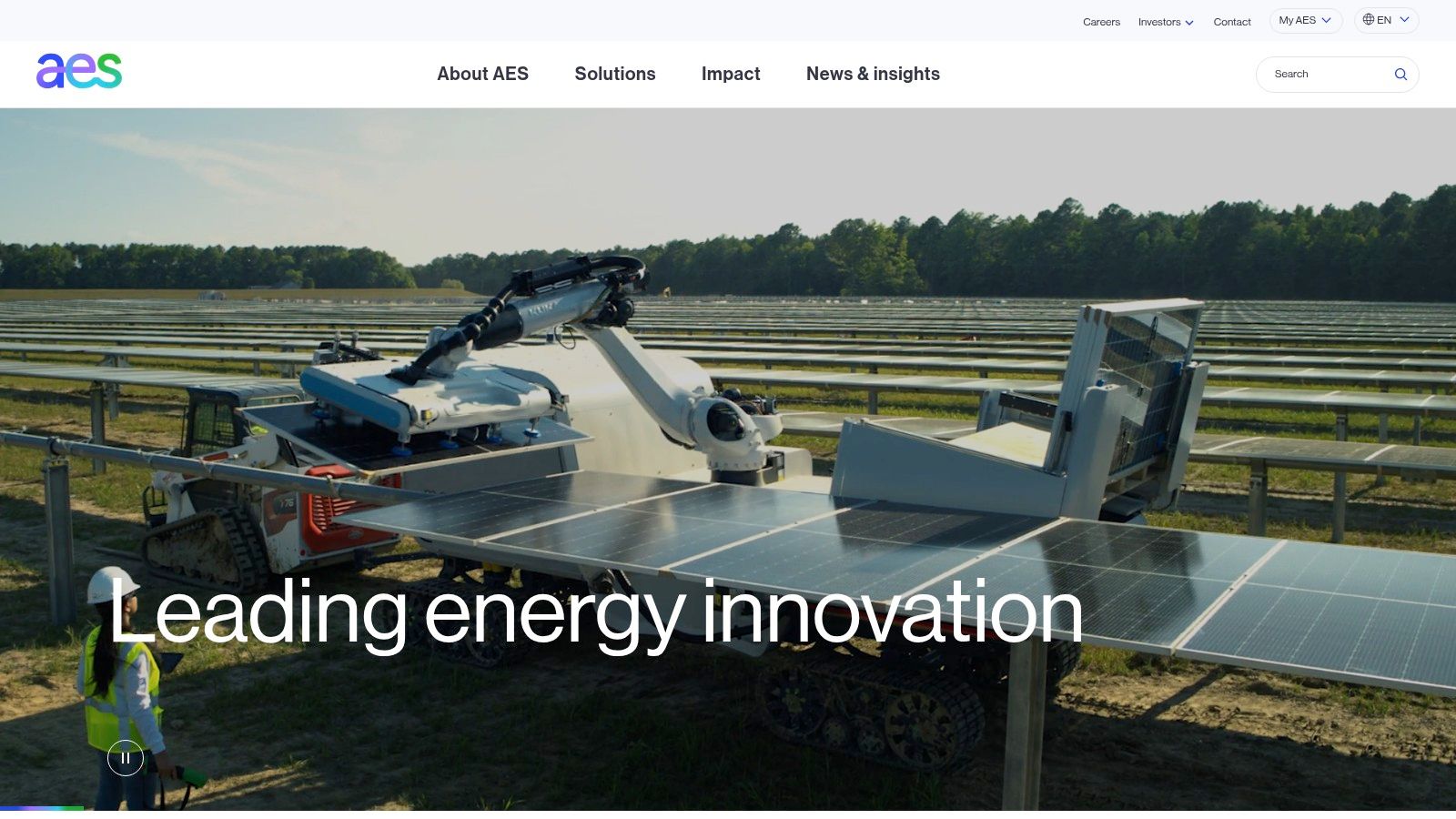
AES is a strong target if you want to work where clean energy, data modeling, and enterprise decarbonization meet. Its appeal isn't just that it develops solar, wind, and storage. It's that the company operates in the harder part of the market, where customers want cleaner power matched more closely to when they consume electricity.
That changes the kind of talent the company needs. The interesting jobs here often sit around portfolio optimization, energy forecasting, software for power delivery planning, contract analytics, and products that help customers understand the difference between annual clean procurement and more time-matched approaches.
This is one of those clean energy companies where product professionals can create real value if they understand constraints. In practice, the work often involves translating grid variability, customer load patterns, and commercial structures into tools people can act on.
The market backdrop helps explain why. Globally, the renewable energy market was valued at USD 1.711 trillion in 2025 and is forecast to reach USD 5.834 trillion by 2034, a projected 14.6% CAGR from 2026 to 2034. The same market outlook says the industrial segment accounted for 43.0% of revenue in 2025, which is a useful reminder that many of the strongest demand signals come from large, operationally complex buyers.
For candidates, that means interview answers should sound commercial, not just technical.
The trade-off is that this isn't lightweight B2C product work. If you need instant user feedback loops, you may find the pace frustrating. If you like gnarly enterprise problems with physical-world consequences, AES is much more compelling.
Sunrun is where cleantech starts to look more familiar to people from consumer tech, fintech, and marketplace businesses. Residential solar and storage require strong sales operations, financing workflows, installation logistics, customer onboarding, monitoring, and long-tail service software. In other words, there are lots of ways for product and engineering teams to influence conversion, retention, and customer trust.
That said, don't confuse “consumer-facing” with “simple.” Residential clean energy businesses live or die on operational handoffs. If design, permitting, financing, installation, and post-install service aren't connected, the customer feels every break.
I'd ask blunt questions here, because the business model depends on execution across many teams.
The broader U.S. market context is favorable. One forecast estimated the U.S. renewable energy market at USD 78.36 billion in 2025 and projected USD 169.49 billion by 2034, with growth linked to IRA incentives, rising corporate procurement, and falling wind and solar costs. For job seekers, that points to a market where customer education and financing still matter a lot, especially when incentives lower friction.
Residential clean energy companies often win or lose on trust transfer. Customers buy the financing story first, the hardware second, and the service experience last.
The downside with Sunrun-style businesses is service complexity. You can build a great sales funnel and still create customer pain if support, maintenance, or transfer processes lag. If you join this type of company, make sure leadership treats post-install experience as product work, not cleanup work.

Enphase Energy is a good example of a hardware-software company that rewards candidates who can think across the stack. Its microinverters, storage products, gateway hardware, and app experience create a tighter system than many people expect from energy tech. That's why it often appeals to firmware engineers, platform engineers, mobile teams, data infrastructure people, and PMs who like working where physical devices and software have to behave as one product.
The hiring challenge for candidates is that these companies rarely want narrow specialists who only understand one layer. They want people who can reason about failure states across hardware telemetry, installer workflows, customer alerts, and grid behavior.
If you're interviewing here, don't pitch yourself like you're joining a pure software startup. Show that you understand installer ecosystems, distributed device fleets, and reliability in the field.
A few angles usually land:
One hiring lesson from startup recruiting applies directly here. The best teams don't just hire for logo familiarity. They hire for problem fit, communication, and adaptability. If you want a better read on how early-stage and high-growth companies screen for that, this guide to recruitment for startups is useful background.
The trade-off with Enphase-style companies is scope. The work is rich, but stakeholder count is high. Product decisions affect homeowners, installers, support teams, distribution partners, and grid-facing functionality. If you like products with clear technical depth and real-world constraints, that's a plus. If you want fewer dependencies, it can feel heavy.

Bloom Energy tends to attract a different kind of cleantech candidate. The pitch here is resiliency, on-site power, and mission-critical infrastructure for large facilities. That's catnip for engineers who like systems that have to stay up, especially if they've worked in data infrastructure, industrial software, reliability engineering, or platform operations.
This is also where clean energy career decisions get more nuanced. Bloom's technology can solve real customer pain around power availability and deployment speed, but candidates should understand the carbon trade-offs tied to fuel source. In recruiting terms, this means you need to decide whether you want the cleanest possible category, or whether you're comfortable joining a company solving reliability and grid constraint problems with an emissions profile that depends on how systems are fueled.
The strongest candidates usually share one trait. They don't treat energy as a brand category. They treat it as an infrastructure problem.
That shows up well when you ask questions like:
If a clean energy company sells reliability, ask what happens on the worst day, not the best day. That's where the product truth shows up.
Bloom is a good fit for people who like enterprise infrastructure and hard operational requirements. It's a weaker fit if your main goal is joining a plainly zero-carbon business model from day one. That doesn't make it a bad opportunity. It just means the trade-off needs to be explicit.
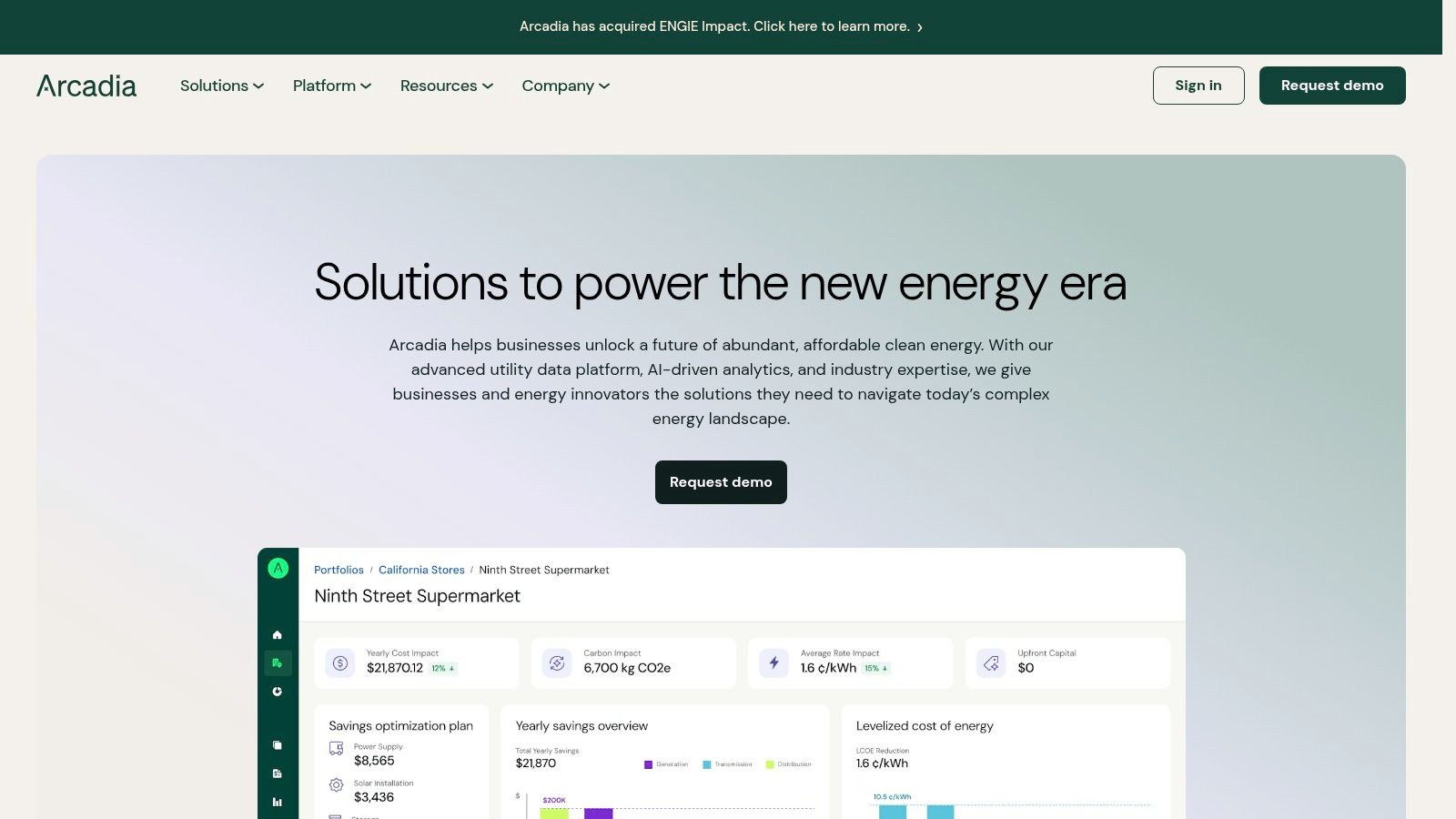
Arcadia is one of the most relevant clean energy companies for software people who want the market access layer rather than the generation asset itself. Its model helps households and small businesses participate in community solar without owning rooftop equipment, which creates product problems that look a lot like fintech, subscriptions, utility integrations, and consumer operations.
That's a meaningful part of the market because clean energy adoption isn't only about adding capacity. It's also about who gets access, on what terms, and whether savings are easy to realize. Product people who care about affordability and user experience should pay attention to companies in this layer.
One of the most overlooked angles in cleantech hiring is equity of access. Some of the strongest long-term companies will be the ones that pair clean power with affordability, financing simplicity, and broad customer reach.
There's a concrete example of that in the market. Clean Power Alliance said its Power Share program provides 100% renewable electricity at a 20% bill discount, with four new PPAs expected to serve about 7,350 customers in 2027 to 2028. That's not Arcadia's model exactly, but it shows why community-oriented energy products matter and why software layers that make enrollment and billing easier can have real impact.
If you're exploring this side of the market, it helps to understand the broader startup career path too. This overview of tech startup careers is a useful companion if you're weighing mission, stage, and role fit.
The big trade-off is policy and market dependency. Community-solar availability varies by state and utility, so product teams often work with uneven market conditions. But for engineers and PMs who want clear user impact, this is one of the better places in clean energy to find it.
| Company | Implementation complexity | Resource requirements | Expected outcomes | Ideal use cases | Key advantages |
|---|---|---|---|---|---|
| First Solar | Moderate, module supply for utility projects; integration by developers | Large-scale manufacturing, domestic supply chain, developer/EPC coordination | High lifetime energy yield, bankable modules, domestic-content compliance | Utility-scale solar farms seeking US-made panels and federal incentives | US-made CdTe thin-film modules, strong performance in heat/low-light, bankability |
| NextEra Energy Resources (NEER) | High, multi‑GW development, complex PPAs and interconnection | Significant capital, transmission expertise, project development teams | On‑time delivery of large renewables + storage portfolios, bespoke offtake structures | Utilities, data centers, large corporates needing multi‑GW solutions | Scale and financial strength, experienced in interconnection and custom PPAs |
| AES Clean Energy | High, design and operation of hourly‑matched 24/7 CFE portfolios | Multi‑technology build/own/operate capabilities, advanced software for hourly matching | Hourly-matched carbon‑free supply, portfolio-level decarbonization | Hyperscalers and corporates needing time‑matched decarbonization | Innovative 24/7 CFE contracting, integrated solar/wind/storage expertise |
| Sunrun | Low–Moderate, turnkey residential installs and fleet aggregation | Nationwide installation network, financing options, ops & maintenance teams | Residential solar + storage with predictable payments; VPP aggregation potential | Homeowners seeking low/no‑upfront cost and full-service installation | Multiple financing options, turnkey service, large residential footprint |
| Enphase Energy | Low–Moderate, hardware + connected software for installers/prosumers | Electronics manufacturing, installer/distributor network, cloud monitoring platform | Modular panel‑level inverters, reliable uptime, app-based monitoring and backup | Installers and prosumers wanting modular microinverters and integrated storage | IQ microinverters with grid‑forming capability, strong warranties, integrated app |
| Bloom Energy | High, on‑site SOFC deployments and microgrid integration | Capital equipment, fuel supply (natural/renewable gas or hydrogen), controls/integration | Resilient on‑site power with high efficiency; emissions depend on fuel choice | Data centers, manufacturers, facilities needing resilient, continuous power | Solid oxide fuel cells for modular, high‑reliability on‑site generation |
| Arcadia | Low, consumer enrollment and utility credit routing; utility integrations needed | Software platform, utility data integrations, partnerships with community projects | Access to community solar bill credits without rooftop equipment | Renters/homeowners and small businesses without rooftop access | Low‑friction access to solar savings, no equipment required, transparent billing |
Hundreds of clean tech manufacturing projects have been announced in the U.S. in the past few years, as noted earlier. For job seekers, that matters less as a headline and more as a hiring signal. It points to sustained demand for engineers, product managers, data talent, and technical operators across power, storage, software, and industrial systems.
That changes how I'd run the search.
Start with the work, not the mission statement. Engineers and product people usually have better outcomes when they pick a company based on the actual technical problems they want to solve, the pace they can handle, and the constraints they're willing to live with. Manufacturing-heavy businesses tend to need stronger systems thinking, cross-functional patience, and comfort with slower release cycles. Consumer energy platforms and distributed energy companies usually move faster, but they also bring messier channel dynamics, support burdens, and pricing pressure.
The companies in this guide give you a useful spread of options. First Solar fits candidates who want factory systems, industrial software, and hardware tied to real-world throughput. NextEra Energy Resources and AES Clean Energy make more sense for people who want grid-scale infrastructure, project development, forecasting, and enterprise energy workflows. Sunrun and Arcadia are better fits for candidates coming from consumer tech, fintech, marketplaces, or service-heavy products. Enphase suits engineers who like device software, edge systems, and hardware-software coordination. Bloom Energy is a strong target for candidates interested in reliability, controls, and on-site power systems.
A good search in cleantech is narrower than people expect.
Strong candidates usually show three things clearly. They can explain the system they've built, the operational constraint they handled, and the business outcome they improved. In this sector, that often matters more than having a perfect climate resume. A payments PM can transition into solar financing. A logistics engineer can move into field ops software. A backend engineer with IoT experience can be credible for distributed energy or hardware-connected platforms if they can explain the failure modes, latency trade-offs, and customer impact.
Public-impact work is another angle people underrate. Research from WRI points out that equitable clean-energy growth depends on broader participation by underserved communities, including ownership, contracting, and skilled work. It also notes that the IRA's Direct Pay provision expands access to tax credit value for nonprofits and state, local, and Tribal governments over a 10-year period through structures they historically could not use (WRI on an equitable U.S. clean energy transition). That creates real product and implementation work in financing tools, public-sector delivery, enrollment systems, and community energy programs.
If you're also researching the buyer side of solar adoption, these expert tips for choosing Florida solar are a helpful reality check on how customer decisions get made.
My advice is simple. Write a profile that makes your fit obvious. Spell out your technical strengths, name the business problems you solve well, and show that you understand the operating realities of the clean energy company you want to join.
Underdog.io is a practical place to do that without turning the process into a second job. Create a profile and you can get in front of vetted startups and high-growth tech companies, including teams working on real clean energy problems, through a candidate-first process built for engineers, product managers, designers, and data professionals.